
Crane Appraisal
Certified crane valuations for lifting contractors, rental fleets, lenders and courts. Starting at $295.
Typical turnaround: 5–10 business days. Rush available.

Typical turnaround: 5–10 business days. Rush available.









A crane appraisal is a signed opinion of value for one lifting machine, for a stated use, as of a stated date, under a defined premise of value, meaning the kind of sale the number assumes. Crane here means crawler, rough terrain, all terrain, truck-mounted and boom truck cranes, tower cranes, and overhead and gantry cranes. On a crane the number turns on the load chart for the configuration as it sits, the boom, jib and counterweight on the machine, the hours on each engine, and the inspection and repair record, more than on headline tonnage. The effective date is usually the current date unless a divorce or estate file fixes an earlier one, and whoever requested the appraisal confirms it. A dealer quote, a book value or a depreciation schedule is a price, with no premise, date, comparables or signature behind it, so a reviewer cannot rely on it.
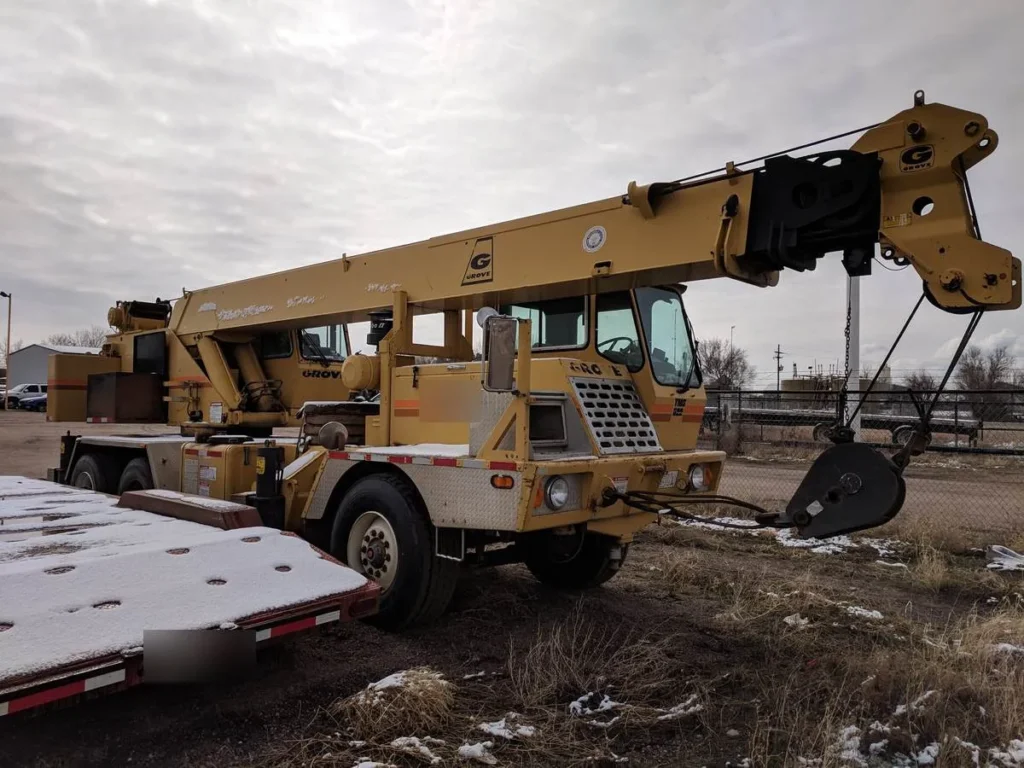
What drives a crane’s value, starting with the load chart
We read a crane in this order, heaviest first.
Rated capacity, from the load chart. Rated capacity is what the crane is rated to lift at a given boom length, boom angle and load radius with a given counterweight, and it comes from the manufacturer’s chart for the crane as built, not from headline tonnage. That chart, for the configuration as it sits, is the first document we read.
Boom, jib and counterweight, piece by piece. A lattice boom is a butt section and inserts. A telescopic boom is extending sections. Either comes with separate pieces: a jib or fly, an extension, counterweight slabs and the outrigger setup. The chart that applies depends on which are on the crane: a jib mounts only on the boom lengths the chart allows, and a crane on tires is on a different chart than one on outriggers. A piece is either on the crane and proven, which we call equipped, or something the crane can take, which we call prepped.
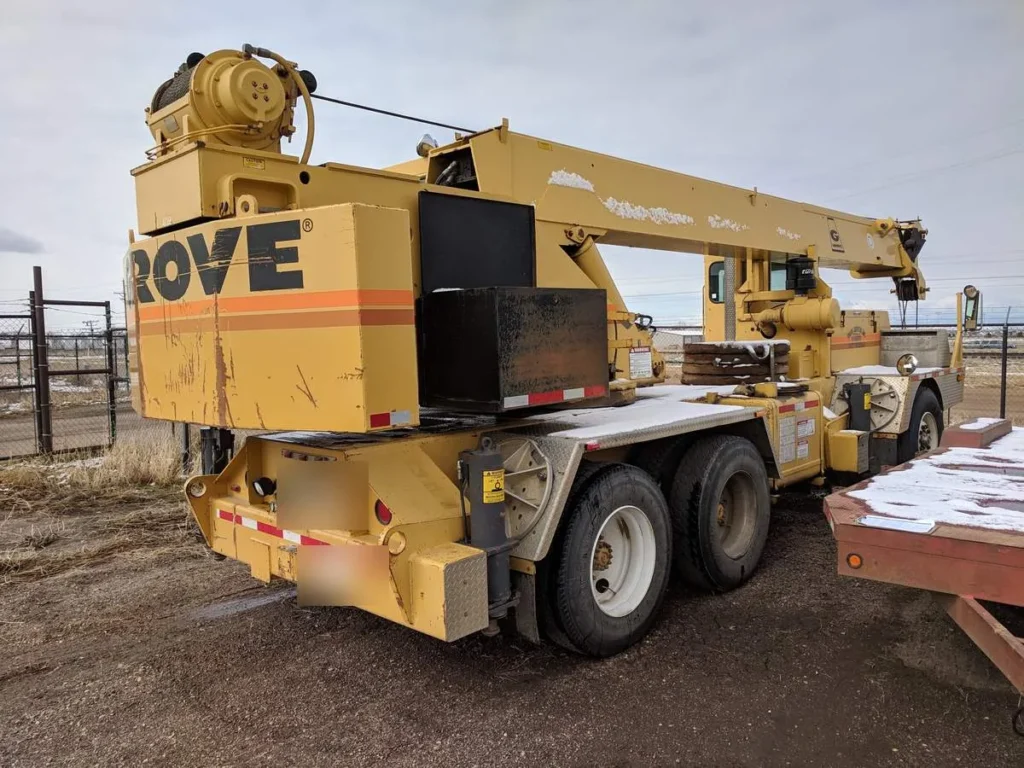
Hours, on each engine the crane has. A twin-engine crane has a superstructure engine and a carrier engine, each with its own hour meter. A single-engine design runs the superstructure off the carrier engine and has one meter. We ask for a photo of each hour meter the crane has.
The inspection record trail. Under OSHA’s construction crane standard, a competent person checks the crane before each shift, a monthly inspection is written up with what was checked and found and the inspector’s name, signature and date, and at least every 12 months a qualified person inspects the crane, boom and jib included, for deformed, cracked or significantly corroded members and cracked welds. The employer keeps monthly records at least 3 months and annual records at least 12. We read those records as evidence of condition. The minimums are short, so missing older records are a documentation gap, not a defect.
Repairs, modifications and severe service. The same standard has a qualified person inspect a structural repair against the manufacturer’s criteria, and inspect for damage after a suspected overload. A modification that affects capacity needs the manufacturer’s written approval, or a registered engineer’s where the manufacturer declines, and a revised chart. We ask for that paper. A chart that does not match the crane as found is a question for the file.
Emissions version and the nameplate’s unit. The emissions version can limit where the crane is sold or operated, and the nameplate’s ton class is US or metric, so we record both as facts.
The number comes from closed sales of the same model and configuration under the sales comparison approach. For an overhead or gantry crane, price context is in our gantry crane cost guide.
We read the qualified person’s record and value the crane. We do not perform the inspection, and the report does not certify that the crane is safe or compliant.
Desktop file or site visit for a crane
A desktop appraisal values the crane from photos and records, without a site visit. The file closes when the serial or PIN plate matches the paperwork, every hour meter the crane has is photographed, the load chart in the cab matches the configuration in the photos, the boom, jib, counterweight slabs and outriggers are photographed as they sit, recent photos or video show the swing bearing and wire rope, and location and custody are confirmed. A desktop appraisal does not certify physical condition, operating status or the absence of damage.
The file goes to an on-site appraisal when pieces have to be counted in a yard, as with a crawler’s boom inserts or a tower crane’s components, when the records have gaps, when a repair or suspected overload is unexplained, when condition cannot be read from the photos, or when the crane is on a jobsite or in a rental fleet and custody is unclear. A desktop report on a file that needs a visit costs the client the whole engagement. We put eyes on the crane or we decline the file. Our desktop versus on-site appraisal resource compares the two.
Plates, load chart, meters and records to send for a crane
- The serial or PIN plate, with make, model and year.
- The nameplate, with the ton class in US or metric tons.
- The load chart from the cab for the configuration as it sits.
- A photo of each hour meter the crane has.
- Boom length, jib or fly sections, counterweight slabs and outrigger setup, as installed.
- Photos or video of the swing bearing and wire rope.
- The monthly and annual inspection records, repair records, and any written approval of a modification with its revised chart.
- The carrier’s title or registration, where the state issues one for that crane type.
- Where the crane is, who has custody, the intended use (what the report will be used for) and the deadline.
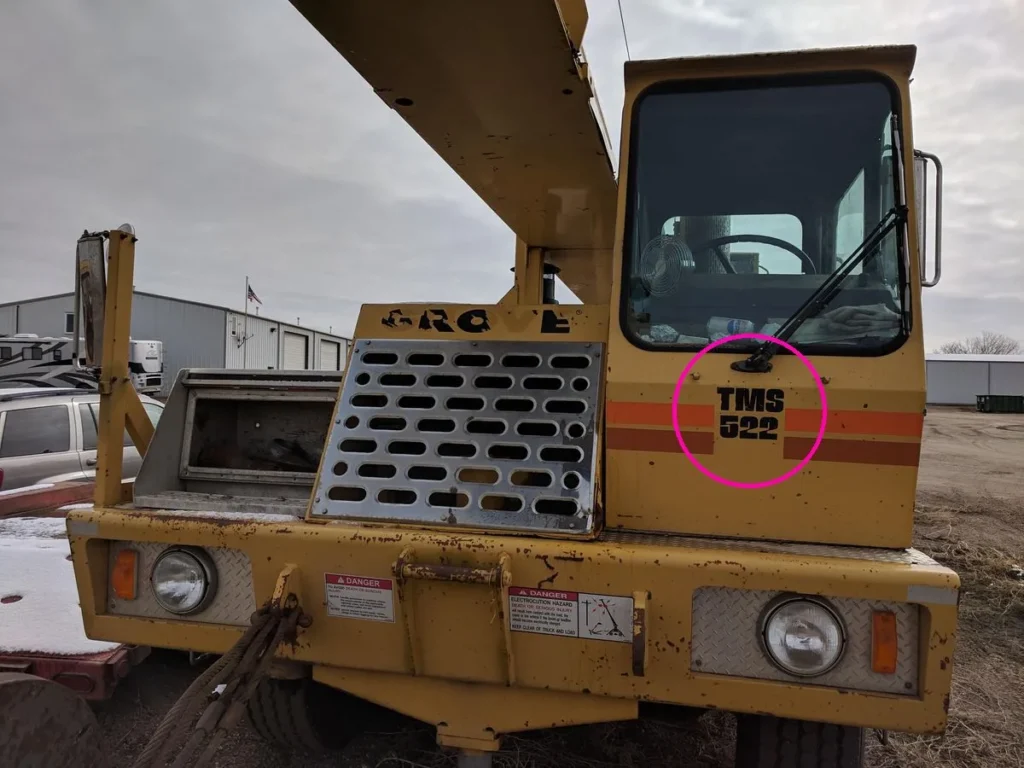
A partial set is still worth sending, because the gaps tell us which scope the file needs. The general list is on our documents needed for an equipment appraisal page.
Which definition of value a crane file calls for
Fair Market Value (FMV) assumes a normal open-market sale. Orderly Liquidation Value (OLV) assumes a limited but reasonable time to market the crane. Forced Liquidation Value (FLV) assumes a sale on a short clock. Our FMV, OLV and FLV resource compares the three.
A lender holding the crane as collateral usually asks for OLV, what the crane brings if the loan goes bad. Estate and divorce files and partner buyouts usually call for FMV, and a federal estate tax file uses the regulation’s own definition, a willing buyer and a willing seller, neither under compulsion and both informed. A planned auction or distressed disposal usually calls for FLV, and an insurance file may name its own measure in the policy. The premise changes the number, not the reading of the crane: the chart, the pieces and the hours are the same facts under all three. Whoever will rely on the report confirms the premise before work starts.
What a crane report has to show a reviewer
- Reviewer summary up front: intended use, each intended user by name (anyone besides the client who will rely on it), premise of value, effective date and the conclusion.
- Scope disclosure: desktop or on-site.
- Identification and the configuration inventory as found, with the load chart it matches.
- Hours on each engine.
- Condition, with the inspection and repair records summarized.
- Comparable crane sales of the same model and configuration, each with its source.
- Adjustments, with the rationale for each.
- Certification and limiting conditions.
Every report follows USPAP, the Uniform Standards of Professional Appraisal Practice published by The Appraisal Foundation, and our USPAP standards page covers what that means for a crane report.
Cost and timing for one crane
A desktop appraisal of a single crane starts at $295. Standard turnaround is 7 to 10 business days from the signed engagement letter and payment. On-site work and more than one crane are quoted on scope.
Who appraises the crane and signs the report
Rhett Crites, CMEA (Certified Machinery and Equipment Appraiser, NEBB Institute) and CAGA (Certified Appraisers Guild of America), does every analysis and signs every report, from matching the chart against the photos to selecting the comparable crane sales. The firm has appraised heavy equipment, and nothing else, since 2009, and cranes are part of that work. It does not buy, sell, broker or auction equipment. His credentials are on the equipment appraiser qualifications page.
Questions about appraising a crane
How much does a crane appraisal cost?
A desktop appraisal of one crane starts at $295, with standard delivery in 7 to 10 business days from the signed engagement letter and payment. A crane that needs a site visit, or more than one crane, is quoted on scope. The fee never depends on where the value lands.
What is my crane worth?
It depends on the premise of value and on the crane as it sits: the load chart for the installed configuration, the boom, jib and counterweight on the machine, the hours on each engine, the records, and closed sales of the same model and configuration. We publish no value ranges, because a range without a chart, an effective date and a premise is a price guess.
Why does a crane appraiser need the load chart?
The chart is the crane’s rated capacity for a given boom length, load radius and counterweight, and it applies to the crane as built, so a modification that changes capacity needs a revised chart. It lives in the cab and is the first document we read, because it tells us which configuration the comparable sales have to match.
Does a crane appraisal replace the annual inspection?
No. The annual inspection is done at least every 12 months by a qualified person for the employer under OSHA’s construction crane standard, with a signed, dated record of what was checked and found. We read that record as evidence of condition. We do not perform the inspection, and the appraisal does not certify that the crane is safe or compliant.
Can a crane be appraised from photos?
Yes, when the photos and records carry the file: a serial or PIN plate that matches the paperwork, each hour meter the crane has, the load chart for the configuration shown, the boom, jib, counterweight and outriggers as they sit, the swing bearing and wire rope, and confirmed location and custody. When pieces have to be counted in a yard or the records have gaps, it needs a site visit.