Heavy Equipment Appraisal for Tax Purposes
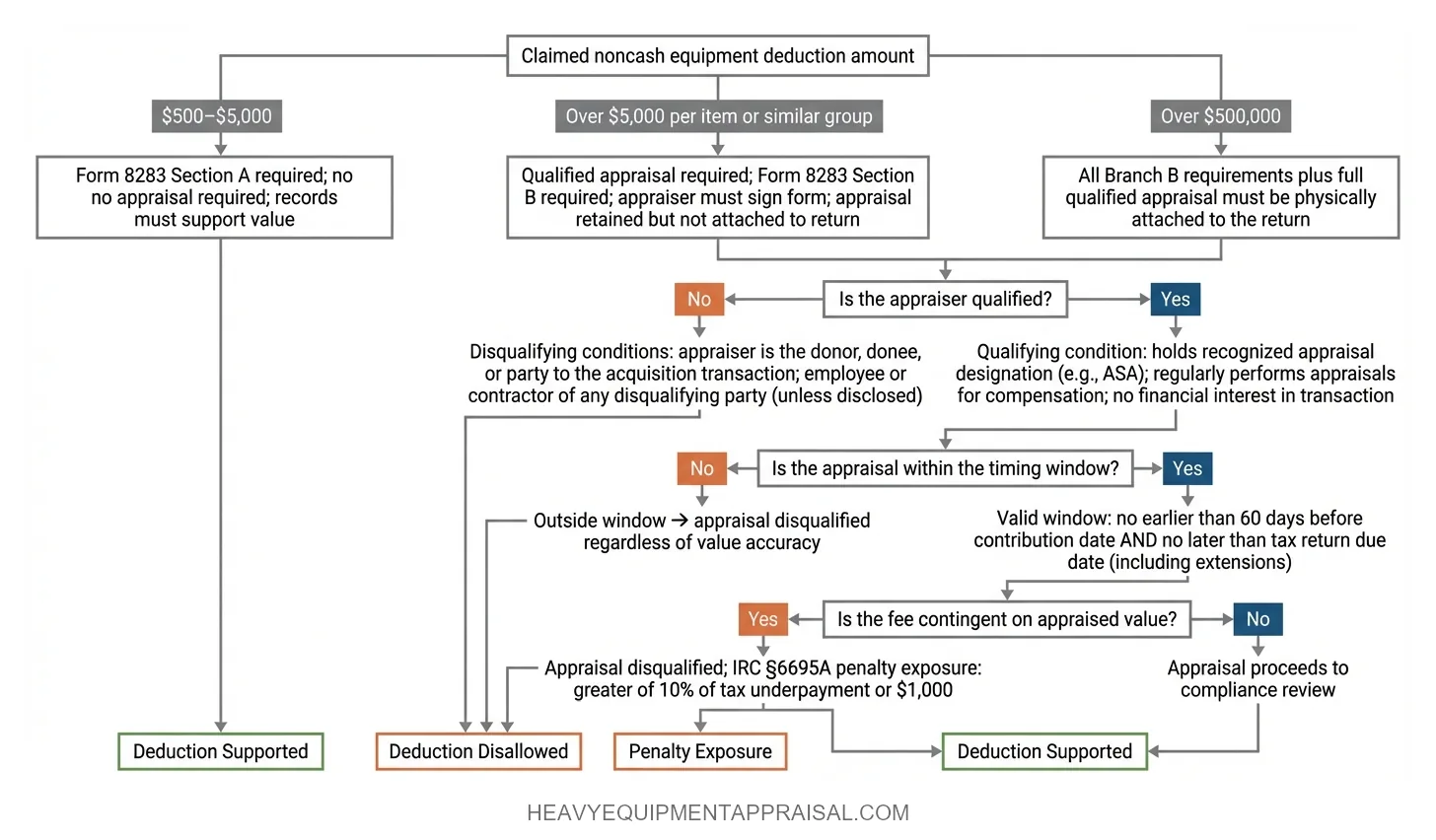
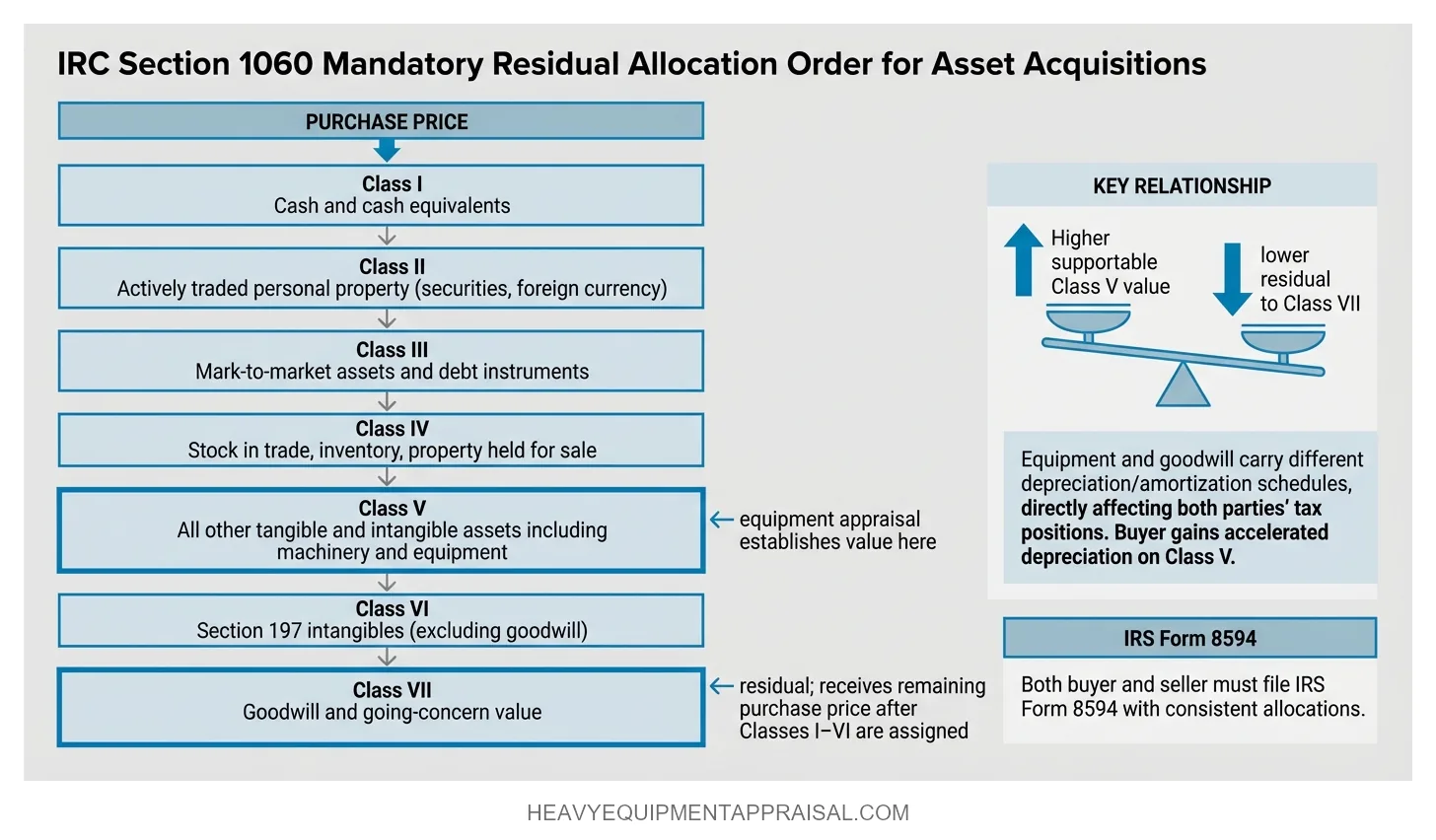
IRS rules require qualified appraisals for equipment donations over $5,000, estate tax, cost segregation, and property tax appeals. Learn the standards, thresholds, and report requirements.
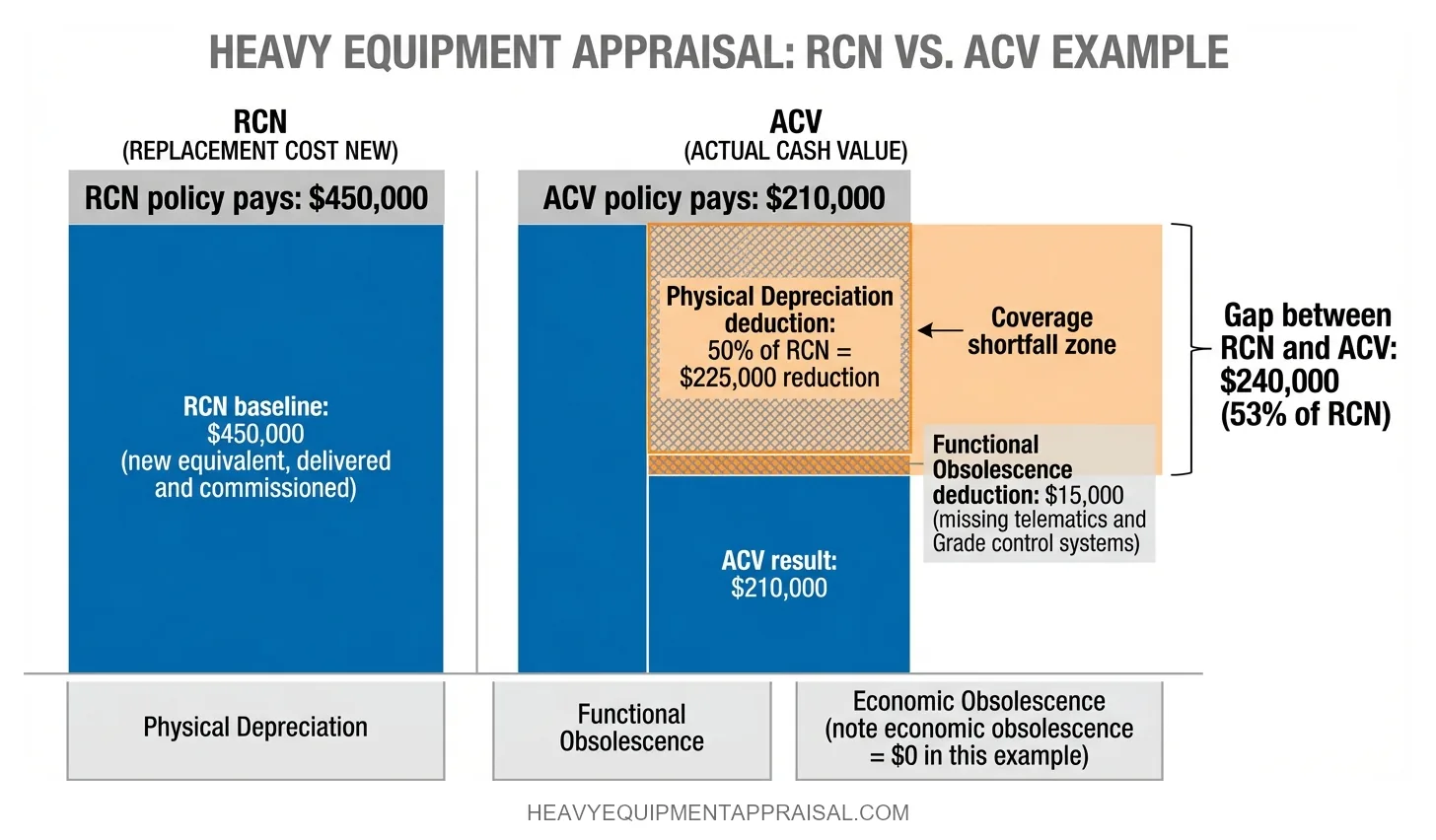
Equipment appraisals for insurance establish the correct value basis for coverage, claims, and dispute resolution. Learn how RCN, ACV, and policy type determine what an insurer pays.
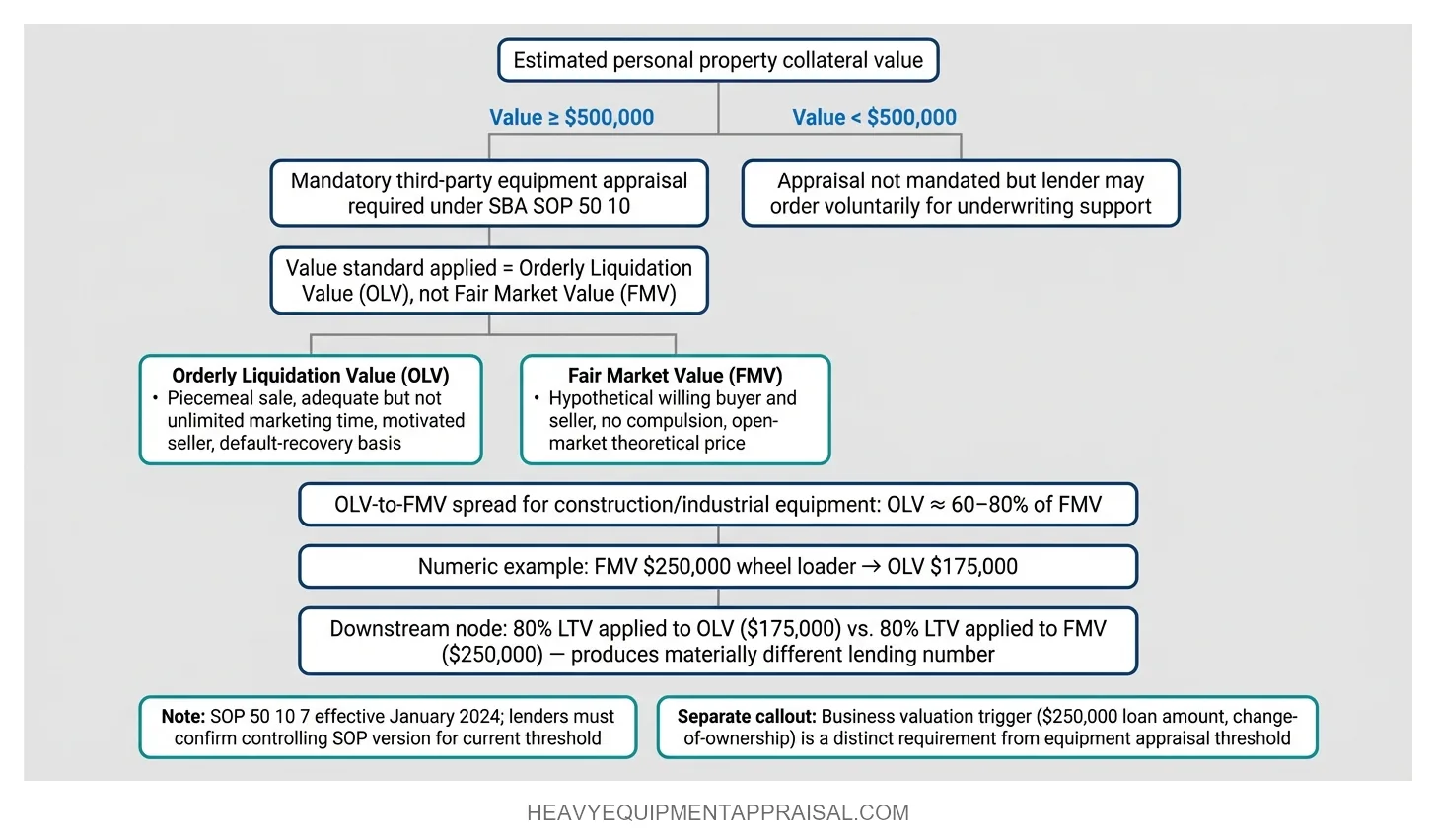
SBA lenders require equipment appraisals using orderly liquidation value, not fair market value. Learn the SOP thresholds, USPAP requirements, appraiser credentials, and report standards for compliant SBA loan appraisals.
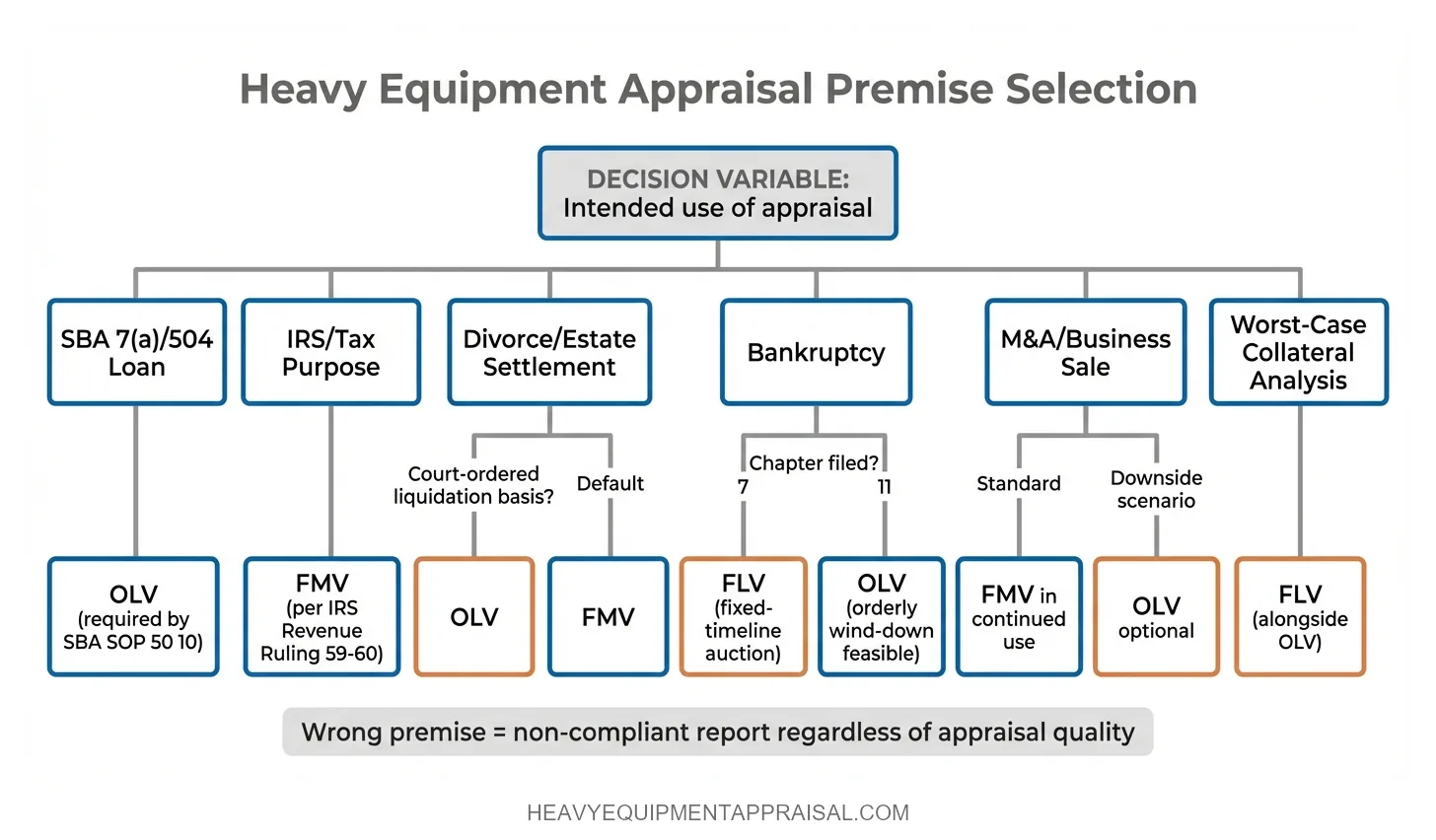
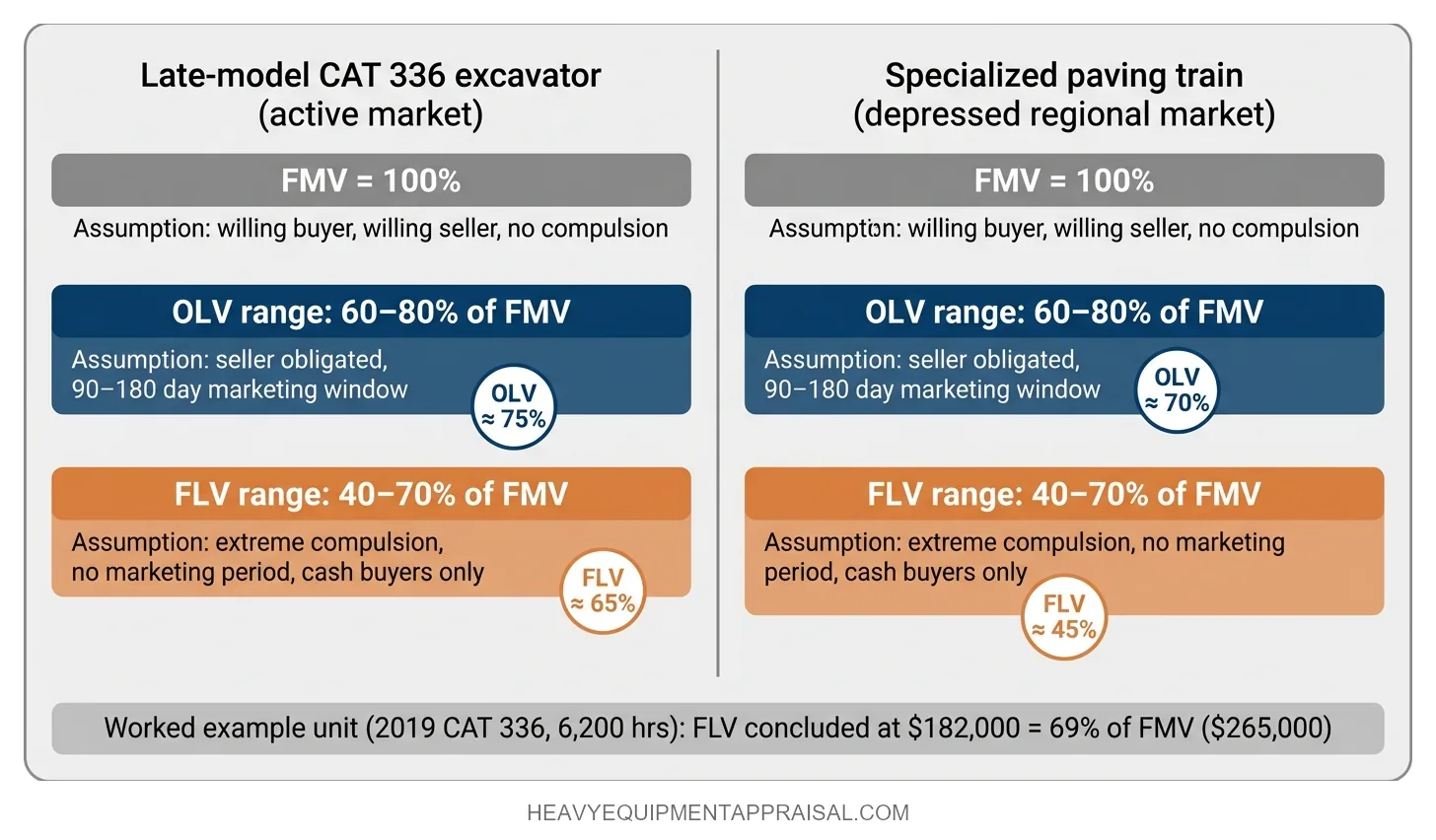
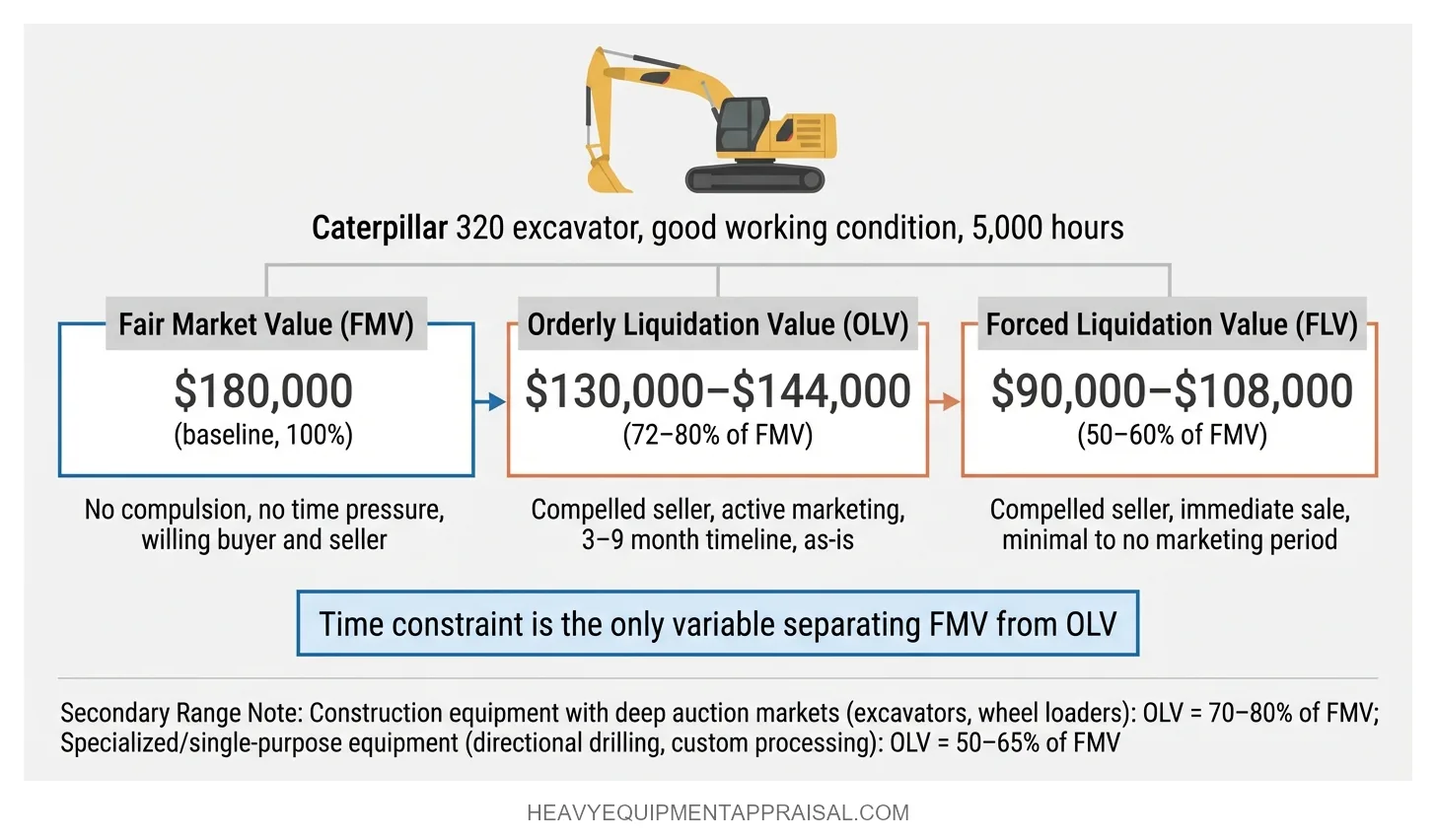
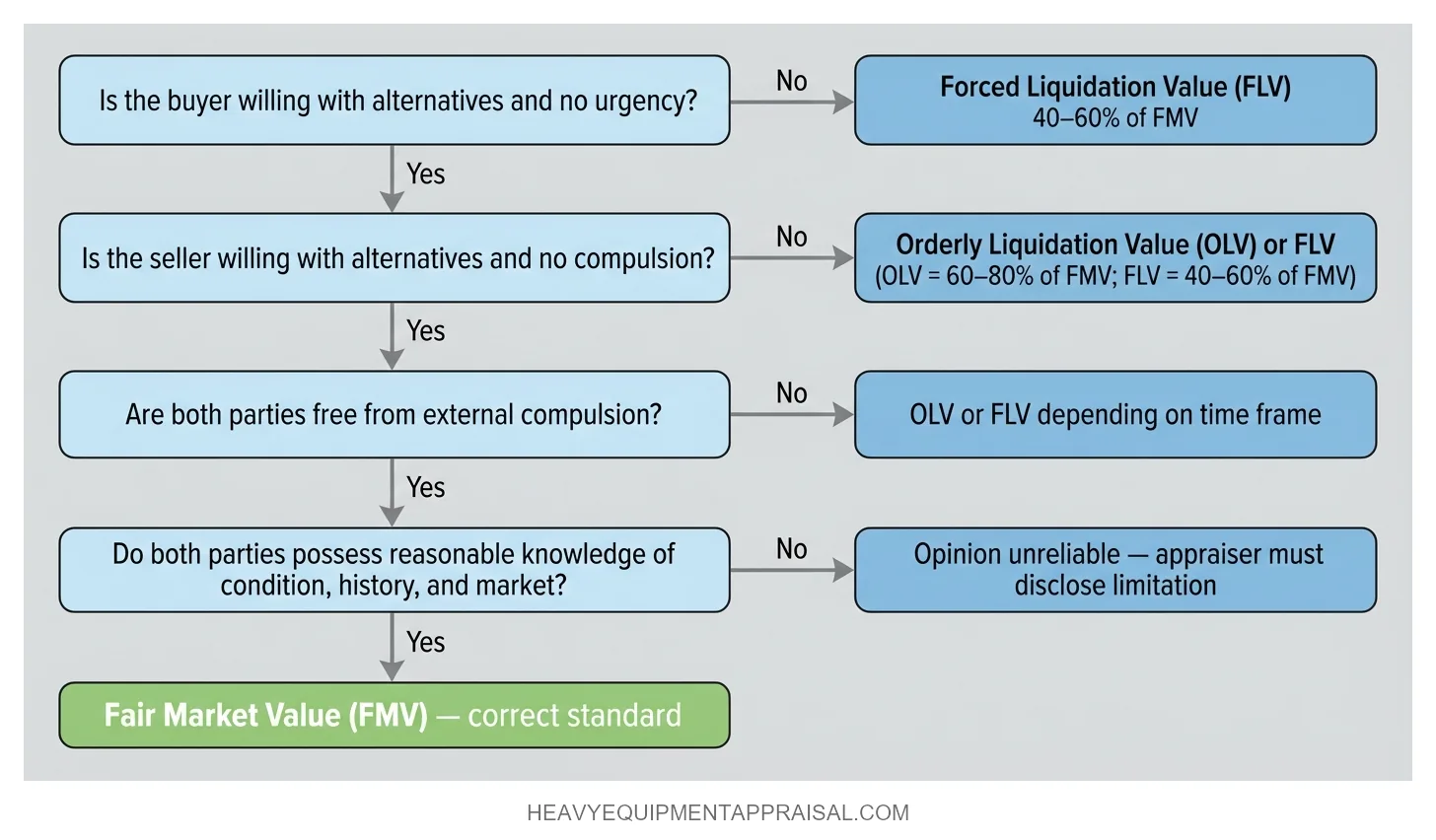
“Fair market value, orderly liquidation value, and forced liquidation value are the 3 standard value premises in equipment appraisal. Learn definitions, use cases, and which premise your situation requires.”
Forced liquidation value (FLV) is the price equipment brings under compulsion with no marketing period. Learn how appraisers derive FLV, when it applies, and how it differs from OLV and FMV.
Orderly liquidation value (OLV) is the estimated gross proceeds equipment would generate if sold through normal channels within a compressed timeline. Learn how OLV is developed, when it’s required, and what separates a credible OLV appraisal from a weak one.
Fair market value (FMV) is the most commonly required standard for equipment appraisals in tax, legal, and transactional contexts. Learn the precise definition, assumptions, methodology, and compliance requirements.
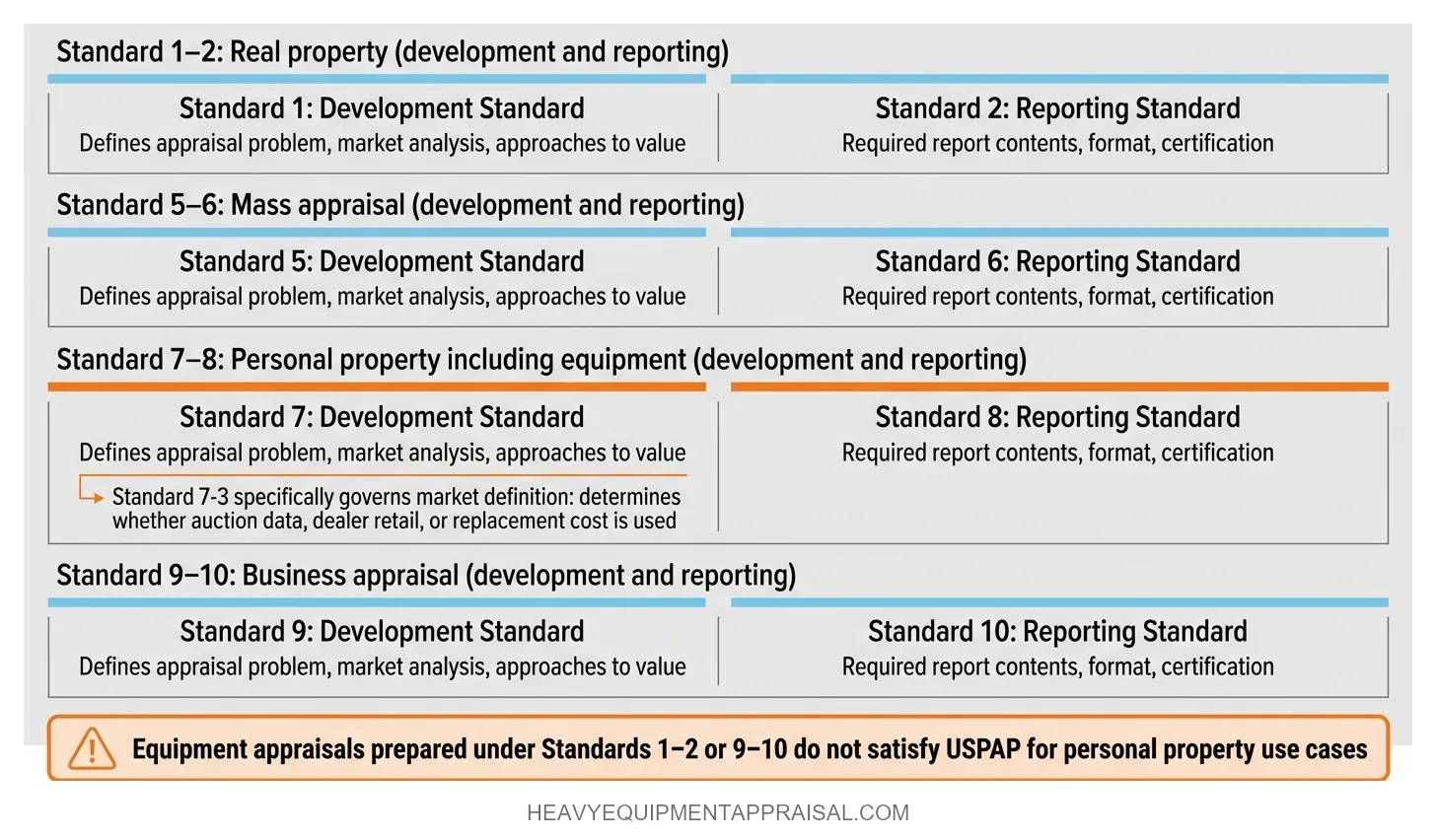
USPAP sets the ethical and methodological standards for credible equipment appraisals. This guide covers the standards that apply to personal property, what compliance requires, and when a non-compliant appraisal fails.
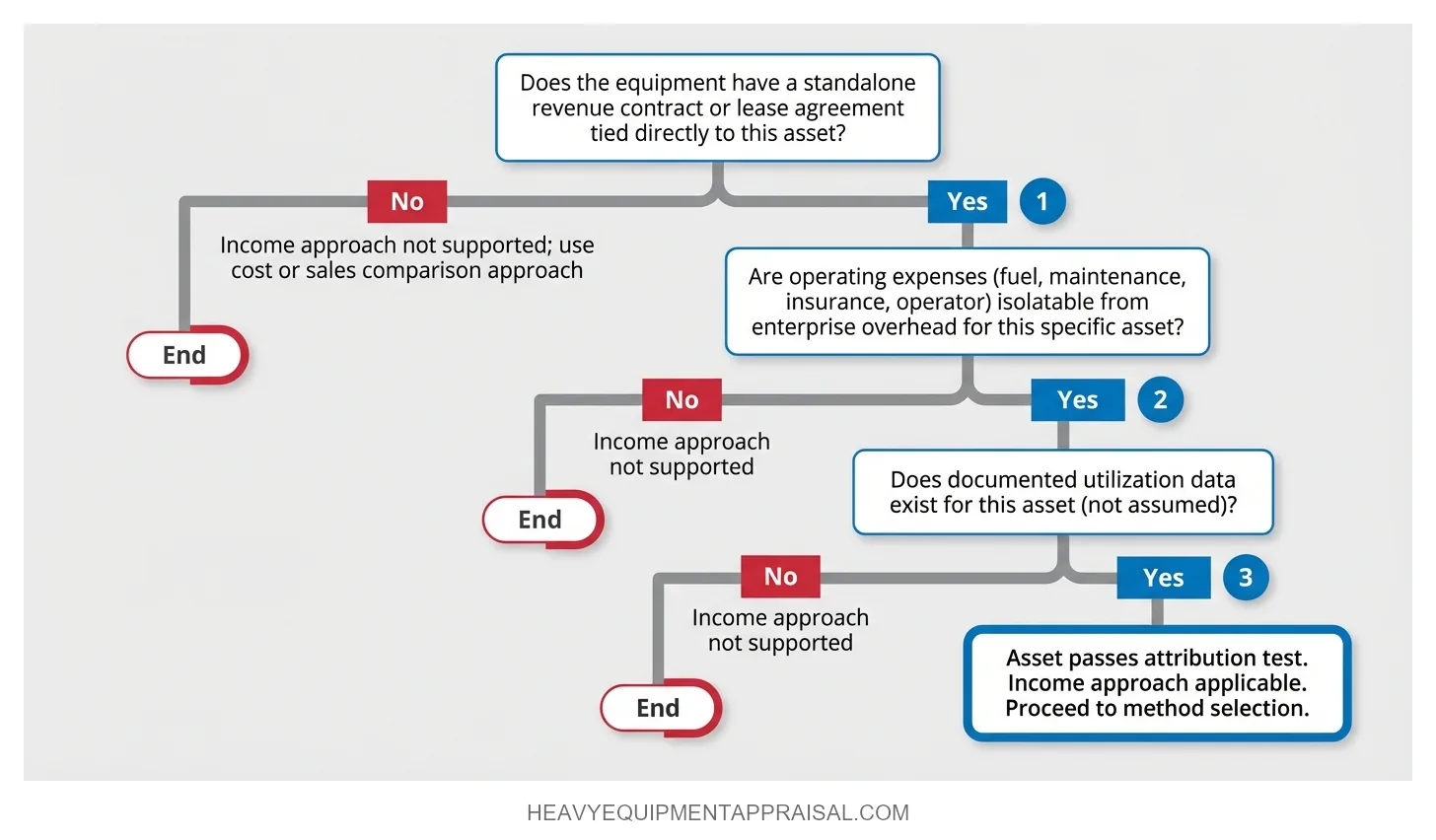
The income approach values equipment by converting future economic benefits into present value. Learn when it applies, how direct capitalization and DCF work, and why most equipment fails the income attribution test.
The sales comparison approach (SCA) estimates equipment value by analyzing recent sales of comparable machines and adjusting those prices to account for differences between the comps and the subject. It is the default valuation method for heavy equipment categories with active resale markets: Lenders, attorneys, and fleet owners rely on SCA-based appraisals because the method…
Provide your contact information & a list of the equipment. We will review the details & send a quote for the certified report, including the total fee & delivery timeline.