About Heavy Equipment Appraisal

Heavy Equipment Appraisal is a machinery and equipment valuation firm led by Rhett Crites, CMEA, CAGA.

Before appraisal work, I earned a computer science degree and spent more than a decade as a software engineer. That background still affects how I work. I am not quick to trust a clean-looking number until I understand what is behind it.

I started HeavyEquipmentAppraisal.com in 2009 while toiling in Corporate America. Heavy equipment was already in the family orbit, with more than 30 years of equipment exposure around me.

The appraisal practice grew out of that overlap between data work and heavy equipment.

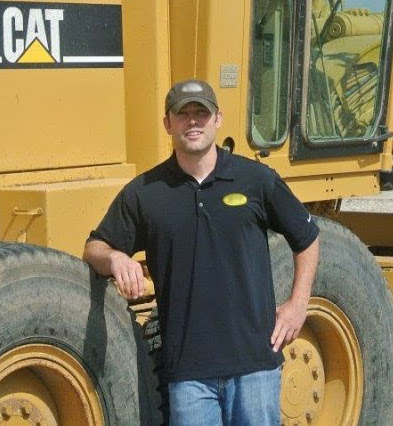
Heavy Equipment Appraisal - about me

The Dredge Barge That Changed How I Think About Specialized Equipment


330 Ammco dredge barge with enclosed operator station inspected near Lamar, Colorado for a heavy equipment appraisal
A 330 dredge barge inspection near Lamar, Colorado. Some assignments require more than a clipboard.

One of the most memorable assignments I’ve handled was near Lamar, Colorado, for Carder, Inc.

A main asset was a 330 Dredge Barge Ammco: a 14″ x 16″ dredge barge with an enclosed operator station, 82′ x 294″ barge, Cat 398 800 hp air-start main engine, 65-foot ladder, winches, Fairbanks pump, Intertec double pump cutter, 16-inch intake, 14-inch discharge, and related piping.

I had to take a boat just to reach it.

That assignment was unlike anything I had done to that point. It was not a clean “find three recent sales and adjust” problem.

The buyer pool was narrow.

The configuration mattered.

Transport mattered.

Utility mattered.

The question was not just “what is a dredge barge worth?” It was “who would actually buy this specific dredge barge, in this location, with this configuration, and what would they discount for the work required to put it into service?”

That file changed how I think about specialized equipment.

A skid steer may have dozens or hundreds of usable comps. A dredge barge does not. When the market is thin, the appraiser has to work harder. You have to understand what the machine is, who the likely buyers are, how location affects demand, what the equipment would cost to move or recommission, and why a generic equipment database may not tell the whole story.

It also taught me to pay attention to the parts of the machine that narrow the market even further: power configuration, pump setup, ladder length, discharge size, transport constraints, and whether the next buyer can put the equipment to work without rebuilding the whole story.

That is the kind of assignment that makes “heavy equipment appraisal” feel less like a category and more like a craft.

What Qualifications / Credentials Do You Have?


Rhett Crites holds the Certified Machinery and Equipment Appraiser designation from NEBB Institute and the CAGA designation from the Certified Appraisers Guild of America.

I pursued the CMEA designation from NEBB Institute because more of our work was being read by people who were not part of the original conversation: SBA lenders, bank reviewers, attorneys, CPAs, underwriters, and other parties who needed to understand not just the value conclusion, but the appraisal logic behind it.

  • More lender files.
  • More SBA review.
  • More attorneys and CPAs.
  • More assignments where the report might be read by someone who does not know me, does not care about the backstory, and only wants to know whether the report is credible.

CAGA gave me a foundation. CMEA sharpened the machinery-and-equipment side of the practice.

The designation did not replace experience. It gave the experience a stronger professional frame, especially for report structure, reviewer expectations, terminology, and the way machinery and equipment value conclusions need to be supported.

What Gets Missed When the Equipment List Is Too Thin?


A year, make, and model are not enough.

That may sound basic, but it is one of the most common problems in equipment valuation. A 2018 excavator with documented maintenance, strong photos, clean serial number verification, good hours, and the right attachments is not the same value problem as a vague “2018 excavator” on a spreadsheet with no photos and no condition notes.

The same problem shows up across equipment types:

  • A loader with fresh tires is not the same as a loader that needs rubber immediately.
  • A truck with a wet kit is not the same as a truck without one.
  • A machine with a rebuild file is not the same as a machine with a verbal “runs good.”
  • A dredge barge is not a skid steer.
  • A landfill compactor is not a pickup.
  • A 90-piece farm equipment schedule is not one clean serial-numbered asset.

When equipment gets flattened into year / make / model, value gets sloppy.

That is why our intake process pushes for the details that actually move value: serial numbers, hours or miles, attachments, condition, photos, maintenance, rebuilds, location, intended use, effective date, ownership details, and whether the report needs desktop, on-site, or hybrid scope.

Can a Client Pre-Order the Value?


If you’ve been appraising for long, you’ve heard some version of this:

“We need this to come in around X.”

I understand why people ask.

Maybe a loan needs to work. Maybe a buyout number is uncomfortable. Maybe a seller has already anchored to a price. Maybe the owner believes the equipment is worth more because of upgrades, care, or recent maintenance.

But the appraisal cannot start with the conclusion and work backward. At least not for Heavy Equipment Appraisal.

When that happens, my answer is simple: I can appraise the equipment, document the support, and explain the conclusion. I cannot accept an assignment where the value has already been decided.

What Missing Detail Usually Changes the File?


A lot of valuation problems start before the appraisal begins. The client sends the depreciation schedule. The list looks fine at first glance. Then…the questions start:

  • Where are the serial numbers?
  • Are the hours current?
  • Are the attachments included?
  • Which items are owned, financed, leased, junked, or already sold?
  • Was the undercarriage replaced?
  • Are there recent repair invoices?
  • Are the photos current?
  • Is this the right legal entity?
  • Is the equipment actually at the location shown on the list?

I have seen owners question value after the fact because the equipment had upgrades, maintenance, or configuration details that were never provided. That is frustrating for everyone, because the appraiser cannot support what the file does not show.

Desktop appraisals are only viable when the key evidence can be verified: serial numbers, photos, hours or miles, attachments, condition details, location, and ownership context. Without that, the assignment may still be possible, but the report has to disclose the limits instead of pretending the file is stronger than it is.

When is a Desktop Appraisal Enough?


I like desktop appraisals.

That surprises some people because “desktop” sometimes gets treated like the cheaper, weaker version of a real appraisal. I do not see it that way.

A desktop appraisal can be the right scope when the documentation is strong. If the equipment list is clean, the photos are useful, the serial numbers are visible, the hours are documented, and the condition story is clear, desktop work can be efficient, credible, and appropriate. Oh, and they can save you money!

But desktop work has limits.

If condition is disputed, photos are weak, identifiers are missing, attachments materially change value, the equipment is unusual, or the reviewer requires physical verification, on-site inspection may be the only honest scope.

Our current mix reflects that judgment: roughly 44% of engagements are desktop, 56% are on-site, and 35% involve rush timing.

That mix tells the real story. We are not a desktop-only shop trying to force every assignment into a remote file. We are also not an inspect-everything shop trying to turn every appraisal into a site visit. The scope should follow the evidence and the intended use.

If the file can support desktop, great. If it cannot, the report should not pretend otherwise.

When Does Field Work Change?


On-site appraisal sounds simple until the site reminds you it is not!

  • I have been locked behind a gate at an active sand and gravel pit.
  • I have taken a boat out to inspect a dredge barge.
  • I have left northern Colorado at 3 AM, driven to Roswell, New Mexico, inspected equipment, grabbed Whataburger before leaving town, coasted into a gas station on fumes because I underestimated how remote that stretch of New Mexico really is, and finally made it back home at 3 AM the next day.

Equipment is not usually sitting in a clean showroom with perfect lighting and a spec sheet taped to the window. It may be in a pit, on a farm, behind a locked gate, on a jobsite, in a yard, at a mine, at a landfill, or in the middle of a schedule that does not care about the appraiser’s calendar.

Those assignments taught me a practical lesson: the report may be the final product, but access, logistics, documentation, and field coordination can make or break the appraisal before valuation analysis even begins.

Who Handles the Work?


Heavy Equipment Appraisal is led by Rhett Crites, CMEA, CAGA.

I handle the appraisal analysis, market research, scope decisions, and report conclusions. That includes the parts clients see, like inspection and delivery, and the parts they usually do not see, like sorting through conflicting comps, deciding what market evidence deserves weight, and figuring out whether the information in the file is strong enough for the intended use.

Tracie helps keep the work from turning into chaos.

That means intake, scheduling, follow-up, report coordination, missing information, deadline tracking, and communication. In equipment appraisal, that matters more than people think. A missing serial number, wrong entity name, outdated equipment list, unclear deadline, or poor photo set can create real report problems.