
Excavator Appraisal (USPAP-Compliant)
USPAP-compliant excavator value opinions built from closed-sale comps filtered by ton class, hours band, undercarriage life, and attachment parity (coupler / thumb / buckets).
Proven Excavator Case History: National SBA 7(a) collateral support, IRS 8283 tax-compliance for high-value assets, and FMV/OLV acquisition due diligence. (Proprietary valuation data synthesized from documented Mini, Midi, and 20–24T excavator configurations across all 50 states.)

Your appraiser: Rhett Crites. I review every quote request. Reply in 1 business day (usually faster).
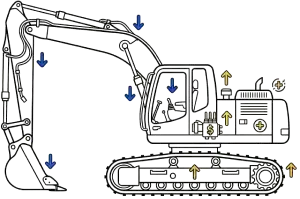
From HeavyEquipmentAppraisal.com
USPAP-compliant equipment appraisals









What You Receive
A reviewer-ready excavator appraisal report you can hand to a lender, CPA, auditor, or court (without back-and-forth).
1. Reviewer Summary Page
Intended use/users, scope, value premise, effective date, and the final conclusion → up front.
2. Scope & Inspection Disclosure
What was inspected (or not), by whom, and how condition was determined.
3. Equipment Identification & Specs
PIN/serial, hour meter, ton class, boom / stick setup, track/UC type, attachments (coupler / thumb / buckets), and photos.
4. Condition Documentation
Undercarriage wear (tracks / sprockets / rollers / idlers), pins & bushings play, hydraulics / leaks, swing/travel notes, and supporting photos.
5. Market Support & Comps
Closed excavator sales/auction results in the same ton class + configuration, with source notes (listings only as secondary context).
6. Valuation Rationale & Adjustments
How comps were normalized (hours, year, condition, geography, attachments).
7. USPAP Certification & Limiting Conditions
Signed certification, assumptions, and disclosures a reviewer expects.
If the number needs to be defended, our reports show the scope, evidence, and logic (not just a price).
Our USPAP Excavator Appraisal Process
We define the excavator’s market identity first, document the condition signals that move price, then reconcile against closed-sale comps with explicit adjustments.
Step 1 – Define the Assignment + Excavator Identity
We lock intended use/users, value premise, and effective date. Then define the excavator as ton class + configuration (e.g., 20–24T class, long stick, steel tracks, coupler + hydraulic thumb). That identity statement becomes the comp filter.
Step 2 – Evidence Capture (Desktop or On-Site)
We document excavator value drivers with photos and notes: PIN/serial + hour meter, undercarriage wear, pins & bushings play, hydraulics / leaks / drift, swing slop / noise, final drive leaks, and a complete attachment schedule (bucket sizes, coupler, thumb, hammer lines).
Step 3 – Closed-Sale Comps + Reconciliation
We anchor on closed-sale comps in the same ton class/config, then normalize for hours band, year band, undercarriage life, condition deltas, geography, and attachment parity. Result? The report shows what moved value and why.
Pricing & Turnaround
Excavator appraisal pricing is driven by scope + unit count + configuration/condition uncertainty. We can quote quickly once we know what must be defensible.
What usually increases scope (common excavator triggers):
Turnaround time
Desktop vs On-Site Excavator Appraisals
We recommend the lightest scope that still survives review. Desktop works only when the file can verify identity, condition, configuration, and control/location. If any of those are unclear, inspection becomes the defensible move.
Desktop
Online equipment appraisals work when your file has:
On-Site
On-Site inspection is the default when any of these are true:
Helpful Resources:
What We Need to Defend an Excavator Value
For excavators, the comp set lives or dies on market identity + condition signals. Two machines with the same model badge can trade in different price universes if undercarriage remaining life, hours credibility, and attachment parity (quick coupler, hydraulic thumb, buckets, aux hydraulics/hammer lines) aren’t verified. That’s why our scope decisions are driven by what the file can prove, NOT what the machine is called.
- PIN/serial and a clear unit ID match
- Hour evidence (meter photo + a story that passes the “wear makes sense” sniff test)
- Undercarriage close-ups (rails/rollers/idlers/sprockets; enough to support remaining life)
- Attachment schedule (what is included: coupler type, thumb, buckets, aux/hammer lines)
- Configuration notes (stick/boom class, guarding, control packages, track type/width when known)
Next are the excavator value signals we adjust for when we select comps and reconcile the final number.
Typical quote turnaround after intake
Coverage (remote + on-site)
What Drives Excavator Value
Excavator values move on a small set of repeatable variables. We filter comps by the machine’s market identity first (ton class + configuration), then adjust for the condition signals that actually change what buyers pay (especially undercarriage life and attachment parity).
Tier 1: Primary value signals (comp filters + big adjustments)
| Value signal | Why it moves price | What we document / verify |
|---|---|---|
| Ton class / size class (mini, midi, 20–24T, 30T+) | Different buyer pools, different demand, different comp universe | Model, operating weight class, boom/stick class, counterweight notes |
| Hours band (and credibility) | Hours drive remaining life expectations; “hours unknown” trades at a discount | Meter photo, hour story consistency vs wear/year, service history when available |
| Undercarriage remaining life (tracks, rollers, sprockets, idlers) | On tracked excavators, UC cost + wear can swing value materially | UC close-ups + remaining-life band (low / mid / high) and any recent UC work |
| Configuration (standard vs long stick / long reach / guarding) | “Same model” comps aren’t comparable if configuration differs | Boom/stick setup, guarding (forestry/demolition), auxiliary packages, quick coupler type |
| Attachments included (parity matters) | Buckets/coupler/thumb/hammer lines change what a buyer pays | Attachment schedule: bucket sizes, coupler type, hydraulic thumb, aux/hammer lines, photos |
| Geography / market liquidity | Regional demand affects time-to-sell and clearing prices | Location/situs, local demand context, comp geography selection notes |
Tier 2: Secondary condition signals (smaller but still value-moving)
| Value signal | Why it moves price | What we document / verify |
|---|---|---|
| Pins & bushings / linkage play | Slop signals wear and future repair; also impacts buyer confidence | Joint play notes (boom/stick/bucket), grease condition, visible repairs |
| Hydraulics condition (leaks, function) | Hydraulics are expensive; leaks or weak function reduce buyer bids | Cylinder seep/leaks, hose condition, function notes if observed/reported |
| Swing + travel / final drives | Mechanical issues here are high-cost risk items | Swing slop/noise notes, travel motor/final drive leak checks, operating notes when available |
| Grade control / GNSS / machine control | Electronics can add meaningful value, but only if present and working | System type, included components, proof it’s installed (not “prewired”) |
How we reconcile
We anchor on closed-sale excavator comps in the same ton class and configuration, then normalize for hours band, model-year band, undercarriage life, attachment parity, and geography. We state the specific drivers (e.g., UC wear delta or coupler + thumb parity), not just “market conditions.”
Excavator Configurations & Attachments We Document
Two excavators can share the same model name and still belong to different comp sets. Configuration and included tools change buyer demand, so we document them as a schedule (what it is / what’s included), not as loose “notes.”
Configuration Schedule
- Size class / ton class: ___
- Boom & stick: standard / long stick / long reach (notes: ___)
- Undercarriage: steel tracks / rubber tracks (track width if known: ___)
- Guarding: none / forestry / demolition (notes: ___)
- Aux hydraulics: none / hammer lines / high-flow / additional circuits
- Machine control: none / installed GNSS / “prewired only” (clarify which)
- Cab & options that matter: A/C, quick coupler type, camera packages (as applicable)
- Thumb setup: none / hydraulic / mechanical (notes: ___)
Attachment Schedule
| Included tool | What matters | Proof we ask for |
|---|---|---|
| Buckets | width, type (digging/clean-up/tilt), quantity | photo + measurement/markings if possible |
| Quick coupler | pin-grabber vs wedge vs brand/type | coupler photo + any ID plate |
| Hydraulic thumb | model/fitment, condition | installed photos + close-ups |
| Hammer lines / aux | presence and functionality | valve/line photos, control confirmation |
| Specialty tools | grapple, auger, compactor, etc. | photos + what’s included in sale |
If you’re in any of these roles and need defensible equipment values for an upcoming decision, you can get an appraisal quote today.
Who Uses Our Excavator Appraisals
Our excavator appraisals are built for review. If your value conclusion needs to hold up to a credit committee, a tax file, or a contested matter, these are the teams we write for.
Lenders & Credit Teams
Collateral support for underwriting, renewals, and credit decisions where the file needs a defensible FMV (and OLV when required).
CPAs & Tax Professionals
Settlement, dispute, estate, and buyout contexts where scope, premise, and support may be challenged.
Attorneys & Legal Professionals
Settlement, dispute, estate, and buyout contexts where scope, premise, and support may be challenged.
Fleet Owners & Operators
Buy/sell timing, replacement decisions, and internal reporting that require a market-grounded view of the machine’s real configuration and condition.
Insurance Teams
Scheduled values and loss-related support where equipment identity, included attachments, and evidence quality matter.
FAQ
If you’re skimming, start here.
These FAQs cover appraisal cost, scope (desktop vs on-site), what we need from you, typical turnaround time, and the value drivers that change results for this equipment type.
Or, call us at (844) VAL-UATE!