
Crane Appraisal (USPAP-Compliant)
USPAP-compliant crane value opinions built from closed-sale comps filtered by tonnage (Metric vs. Short Ton), load chart strength, emissions compliance, and configuration specifics like luffing jibs or wind-kit attachments.
Proven Crane Case History: National SBA 7(a) collateral support, IRS 8283 tax-compliance for high-value asset donations, and enterprise-level fleet acquisition due diligence. (Proprietary market data synthesized from documented metric vs. short ton ratings, load chart strength, and specialized luffing jib/wind-kit configurations across all 50 states.)

Your appraiser: Rhett Crites. I review every quote request. Reply in 1 business day (usually faster).
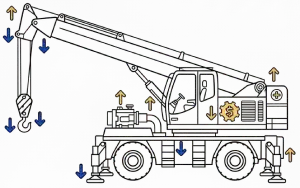
From HeavyEquipmentAppraisal.com
USPAP-compliant equipment appraisals









What You Receive
A reviewer-ready crane appraisal report you can hand to a lender, CPA, auditor, or court (without back-and-forth).
1. Reviewer Summary Page
Intended users/scope, value premise, effective date, and the final value conclusion-up front.
2. Scope & Inspection Disclosure
What was inspected (or not), by whom, and how condition was determined for the crane.
3. Equipment Identification & Specs
Serial/PIN, crane class (AT, RT, Crawler), metric/short ton rating, load chart verification, and boom/jib configuration.
4. Condition Documentation
Detailed evidence of wear on the swing bearing, wire rope, and hydraulics, along with engine hour breakdowns (Upper vs. Lower).
5. Market Support & Comps
Closed crane sales and auction results in the same tonnage and configuration class, with verified source notes.
6. Valuation Rationale & Adjustments
How crane comps were normalized for age, hours (Upper/Lower), Tier rating, counterweight packages, and major inspection status.
7. USPAP Certification & Limiting Conditions
Signed certification, assumptions, and disclosures a reviewer expects to see in a professional crane appraisal.
If the number needs to be defended, our reports show the scope, evidence, and logic (not just a price).
Our USPAP Crane Appraisal Process
We define the crane’s market identity first, document the configuration and regulatory signals that move price, then reconcile against closed-sale comps with explicit adjustments.
STEP 1 – DEFINE THE ASSIGNMENT + CRANE IDENTITY
We look beyond make and model to define the Crane Value Identity as a sum of its configuration, regulatory status, and load chart capabilities. We establish the precise tonnage (Metric vs. Short Ton), axle configuration (e.g., 10x8x10), and boom/jib generation (e.g., LTM 4.1 vs 4.2). That identity statement anchors the comp search.
STEP 2 – EVIDENCE CAPTURE (DESKTOP OR ON-SITE)
We document crane value drivers with photos and notes: PIN/serial, Upper and Lower engine hours, tier rating, and swing bearing deflection. We verify the “steel” in person or through evidence: luffing jib inserts, counterweight slabs, and the presence of a current annual inspection sticker.
STEP 3 – CLOSED-SALE COMPS + RECONCILIATION
We anchor on closed-sale crane comps in the same ton class and configuration, then normalize for hours (Upper vs. Lower), year, condition, and location. We state the specific crane drivers, such as load chart strength at radius or Tier 4 Final status, that moved the final number.
Pricing & Turnaround
Crane appraisal pricing is driven by scope + unit count + configuration/condition uncertainty. We can quote quickly once we know what must be defensible.
What usually increases scope (common crane triggers):
Turnaround time
Desktop vs. On-Site Crane Appraisals
We recommend the lightest scope that still survives review. Desktop works only when the file can verify identity, condition, configuration, and control/location. If any of those are unclear, inspection becomes the defensible move.
Desktop
Online equipment appraisals work when your file has:
On-Site
On-Site inspection is the default when any of these are true:
Helpful Resources:
What We Need to Defend a Crane Value
For cranes, the comp set lives or dies on market identity + condition signals. Two machines with the same model badge can trade in entirely different price universes if one lacks a luffing jib, has an expired annual inspection, or shows excessive swing bearing deflection. That’s why our scope decisions are driven by what the evidence can prove, not what the machine is called.
- PIN/serial and a clear unit ID match to verify the exact generation and chassis configuration.
- Hour evidence via meter photos for both the Upper (superstructure) and Lower (carrier) engines to weight usage intensity correctly.
- Emissions status (Tier 4 Final vs. Tier 3) to determine domestic liquidity versus "export cliff" depreciation.
- Attachment schedule including proof of luffing jib sections, luffing winches, and specific counterweight tonnage present.
- Compliance status via the most recent annual inspection sticker and confirmation of the 10-year major inspection date.
- Configuration notes such as axle drive/steer setup (e.g., 10x8x10), boom length, and specialized "wind-kit" attachments.
Next are the crane value signals we adjust for when we select comps and reconcile the final number.

Typical quote turnaround after intake
Coverage (remote + on-site)
What Drives Crane Value
Crane values move on a small set of repeatable variables. We filter comps by the machine's market identity first (Tonnage + Configuration), then adjust for the condition signals that actually change what buyers pay (specifically engine tiers and load chart strength).
Tier 1: Primary value signals (comp filters + big adjustments)
| Value signal | Why it moves price | What we document / verify |
| Rated Capacity (Tonnage) | Metric vs. Short Ton differences represent a 10% capacity swing and change the machine class. | Tonnage rating, unit of measure (US vs Metric), and load chart radius limits. |
| Engine Tier Status | Tier 4 Final machines command a premium; Tier 3 units face a "liquidity trap" and sharp depreciation. | Emission stickers, DPF/SCR condition, and export compatibility. |
| Upper vs. Lower Hours | Upper hours indicate actual lifting/slewing wear; Lower hours indicate chassis/travel mileage. | Independent engine meter photos and service history consistency. |
| Configuration (Luffing Jib) | A luffing jib package can add $200k–$500k; appraising "luffing prepped" as "equipped" is a massive error. | Physical presence of inserts, heel, top, and independent luffing winches. |
Tier 2: Secondary condition signals (smaller but still value-moving)
| Value signal | Why it moves price | What we document / verify |
| Swing Bearing Play | Excessive deflection indicates a failed bearing, requiring a $50,000+ "split" repair. | Dial indicator measurements or visual deflection during boom-up/down tests. |
| Compliance/Inspections | Expired annuals or impending 10-year major inspections (up to $100k) are immediate "cost to cure" deductions. | Annual inspection stickers and 10-year major inspection certification dates. |
| Counterweight Iron | Missing slabs are high-cost replacement items ($1.50–$2.00 per pound). | Verified weight of base plates, cheek weights, and "Superlift" trays. |
| Wire Rope & Rigging | Damage to rotation-resistant rope on large units can trigger a $25,000 replacement cost. | Visible wire rope condition (bird-caging) and recent cert documentation. |
How we reconcile
We anchor on closed-sale crane comps in the same ton class (Metric vs. Short) and configuration, then normalize for Upper/Lower hour bands, model-year generation (e.g., LTM 4.1 vs 4.2), engine tier status, and attachment parity. We state the specific drivers (e.g., swing bearing deflection or luffing jib inclusions), not just "market conditions".
Crane Configurations & Attachments We Document
Two cranes can share the same model name and still belong to different comp sets. Configuration and included tools change buyer demand, so we document them as a schedule (what is / what is included), not as loose "notes".
Configuration Schedule
- Ton class / size class: Verified Metric vs. Short Ton capacity.
- Boom & Stick: Main boom length and presence of specialized "wind-kits".
- Carrier/Chassis: Axle count and drive/steer configuration (e.g., 10x8x10).
- Engine Tier: EPA Tier 4 Final vs. Tier 3 regulatory status.
- Outriggers: VarioBase or specialized outrigger technology presence.
- Counterweight removal: Presence of hydraulic self-stripping systems.
Attachment Schedule
| Included tool | What matters | Proof we ask for |
| Luffing Jib | Identification of luffing jibs vs. fixed jibs; appraising "luffing prepped" as "equipped" is a $200k+ overvaluation error. | Physical photos of jib inserts, heel, and top sections; verification of independent luffing winches. |
| Counterweights | Specific weight tonnage present; missing slabs are high-cost replacement items ($1.50–$2.00/lb). | Photos of the weight stack or individual slabs stored in the yard. |
| Load Blocks | Tonnage rating and sheave count; multi-sheave blocks define the "heavy lift" capability. | Clear photos of the manufacturer data plates on all included blocks and balls. |
| Superlift / VarioTray | Specialized trays that allow for suspended counterweights, drastically increasing the load chart. | Photos of the tray attachment and the associated hydraulic "Stinger" or tray system. |
| Wire Rope | Condition and certification of rotation-resistant ropes; replacement costs for large cranes can exceed $20,000. | Documentation of the most recent wire rope change or NDT certification. |
| LMI / Software | Generation of the Load Moment Indicator (e.g., LICCON) and whether it supports current attachments. | Screen captures of the LMI boot-up screen and software version. |
If you’re in any of these roles and need defensible equipment values for an upcoming decision, you can get an appraisal quote today.
Who Uses Our Crane Appraisals
Our crane appraisals are built for review. If your value conclusion needs to hold up to a credit committee, a tax file, or a contested matter, these are the teams we write for:
Lenders & Credit Teams
Collateral support for underwriting, renewal, and credit decisions where the file needs a defensible FMV (and OLV when required).
CPAs & Tax Professionals
Settlement, dispute, estate, and buyout contexts where scope, premise, and support may be challenged.
Attorneys & Legal Professionals
Settlement, dispute, estate, and buyout contexts where scope, premise, and support may be challenged.
Fleet Owners & Operators
Buy/sell timing, replacement decisions, and internal reporting that requires a market-grounded view of the machine’s real configuration and condition.
Insurance Teams
Scheduled values and loss-related support where equipment identity, included attachments, and evidence quality matter.
FAQ
If you’re skimming, start here.
These FAQs cover appraisal cost, scope (desktop vs on-site), what we need from you, typical turnaround time, and the value drivers that change results for this equipment type.
Or, call us at (844) VAL-UATE!