
Bulldozer Appraisal (USPAP-Compliant)
USPAP-compliant bulldozer value opinions built from closed-sale comps filtered by weight class, undercarriage configuration, and emission tiers.
Proven Bulldozer Case History: National SBA 7(a) collateral support, IRS 8283 tax-compliance for industrial asset transfers, and enterprise-level fleet restructuring. (Proprietary market data synthesized from documented undercarriage life cycles, blade configurations (PAT/SU), and Tier 4 Final emissions compliance across all 50 states.)

Your appraiser: Rhett Crites. I review every quote request. Reply in 1 business day (usually faster).
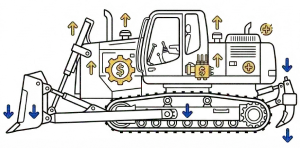
From HeavyEquipmentAppraisal.com
USPAP-compliant equipment appraisals









What You Receive
A reviewer-ready bulldozer appraisal report you can hand to a lender, CPA, auditor, or court without back-and-forth.
1. Reviewer Summary Page
Intended use/users, scope, value premise, effective date, and the final conclusion → up front.
2. Scope & Inspection Disclosure
What was inspected (or not), by whom, and how condition was determined.
3. Equipment Identification & Specs
PIN/serial, hour meter, weight class, undercarriage configuration (LGP/XL/XW), and technology suffixes.
4. Condition Documentation
Undercarriage wear tracks (rails/rollers/idlers/sprockets), blade type, engine tier, and powertrain rebuild history.
5. Market Support & Comps
Closed bulldozer sales/auction results in the same weight class + configuration, with source notes.
6. Valuation Rationale & Adjustments
How comps were normalized (undercarriage cost-to-cure, configuration parity, and 3D GPS premiums).
7. USPAP Certification & Limiting Conditions
Signed certification, assumptions, and disclosures a reviewer expects.
If the number needs to be defended, our reports show the scope, evidence, and logic (not just a price).
Our USPAP Bulldozer Appraisal Process
We define the bulldozer’s market identity first, document the condition signals that move price, then reconcile against closed-sale comps with explicit adjustments.
STEP 1 – DEFINE THE ASSIGNMENT + BULLDOZER IDENTITY
We lock intended use/users, value premise, and effective date—then define the bulldozer as an asset class. This includes identifying the weight class (Mini, Medium, or Large), emission tier (Tier 3 vs. Tier 4 Final), and configuration (LGP, XL, XW). That identity statement filters our comp search
Step 2 – Evidence Capture (Desktop or On-Site)
We document bulldozer value drivers with photos and notes. This covers PIN/serial + hour meter, undercarriage wear (rails/rollers/idlers/sprockets), engine/transmission health, and attachment parity (blade type, ripper, winch). We look for “wear age” consistency vs. the meter to ensure credibility
Step 3 – Closed-Sale Comps + Reconciliation
We anchor on closed-sale comps in the same weight class/configuration, then normalize for hours, engine tier, undercarriage life, and technology suite. We state the specific drivers (e.g., LGP vs. XL or 3D GPS premium) that moved the final number—not just “market conditions”
Pricing & Turnaround
Bulldozer appraisal pricing is driven by scope + unit count + configuration/condition uncertainty. We can quote quickly once we know what must be defensible.
What usually increases scope (common bulldozer triggers):
Turnaround time
Desktop vs On-Site Bulldozer Appraisals
We recommend the lightest scope that still survives review. Desktop works only when the file can verify identity, condition, configuration, and control/location. If any of those are unclear, inspection becomes the defensible move.
Desktop
Online equipment appraisals work when your file has:
On-Site
On-Site inspection is the default when any of these are true:
Helpful Resources:
What We Need to Defend an Bulldozer Value
For bulldozers, the comp set lives or dies on market identity + condition signals. Two machines with the same model badge can trade in different price universes if undercarriage remaining life, hour credibility, and attachment parity (rippers, winches, or GPS) aren't verified. That's why our scope decisions are driven by what the file can prove, NOT what the machine is called.
- PIN/Serial and a clear unit ID match.
- Hour evidence (meter photo + a story that passes the "wear makes sense" sniff test).
- Undercarriage close-ups (rails/rollers/idlers/sprockets) to support remaining life estimates.
- Attachment schedule: what is included (Blade type, multi-shank ripper, winch, drawbar).
- Configuration notes: weight class, guarding, control packages, and track type/width.
Next are the bulldozer value signals we adjust for when we select comps and reconcile the final number.
Typical quote turnaround after intake
Coverage (remote + on-site)
What Drives Bulldozer Value
Bulldozer values move on a small set of repeatable variables. We filter comps by the machine's market identity first (weight class + configuration), then adjust for the condition signals that actually change what buyers pay (especially undercarriage life and tech parity).
Tier 1: Primary value signals (comp filters + big adjustments)
| Value Signal | Why it moves price | What we document / verify |
| Weight Class | Determines transportability and application (Mini vs. Large). | Model, operating weight class, and structural mass. |
| Undercarriage Life | Accounts for 50% of lifetime maintenance costs. | Rails, rollers, idlers, and sprocket wear measurements. |
| Emission Tier | Defines "value floors" for domestic vs. export liquidity. | Suffix codes (e.g., D6T vs. D6R) and DPF/SCR status. |
| Configuration | XL vs. LGP defines the machine's market identity. | Track width, frame length, and blade width. |
Tier 2: Secondary condition signals (smaller but still value-moving)
| Value Signal | Why it moves price | What we document / verify |
| Hours & Rebuilds | 10k hours is a major overhaul/capital event psychological barrier. | Meter photo, SOS oil logs, and documented powertrain rebuilds. |
| 3D Grade Control | Integrated tech is now a liquidity requirement for high-end fleets. | Factory-integrated 3D GPS vs. "base" or "ready" units. |
| Attachments | Active tools like rippers or winches carry significant premiums. | Ripper type (Single vs. Multi-shank) and winch pull capacity. |
| Structural Integrity | Stress cracks or welding on push arms signal extreme-duty cycles. | Inspection for frame welds, leaks, and pivot pin play. |
How we reconcile
We anchor on closed-sale bulldozer comps in the same weight class and configuration, then normalize for hours, engine tier, undercarriage life, and technology parity. We state the specific drivers (e.g., a 20% premium for a documented powertrain rebuild) that moved the final number—not just "market conditions".
Bulldozer Configurations & Attachments We Document
Two bulldozers can share the same model name and still belong to different comp sets. Configuration and included tools change buyer demand, so we document them as a schedule (what is included), not as loose notes.
Configuration Schedule
- Weight Class / Size Class: Mini (under 30k lbs), Medium (30k-100k lbs), or Large (over 100k lbs).
- Configuration Suffix: Standard/EX, XL (Extra Long), XW (Extra Wide), or LGP (Low Ground Pressure).
- Undercarriage: Steel tracks / rubber tracks / SALT (Sealed and Lubricated Track).
- Track Width: Grousers/pads width (affects flotation and ground pressure).
- Emission Tier: Tier 3, Tier 4 Interim, or Tier 4 Final.
- Machine Control: "Grade-Ready" or Factory-integrated 3D GPS (Cat Grade with 3D, Komatsu IMC).
- Cab & Options: EROPS (Enclosed Cab) vs. OROPS (Open Canopy), and guarding packages.
Attachment Schedule
| Included Tool | What Matters | Proof we ask for |
| Blades | 6-way VPAT (Variable Power Angle Tilt) for finishing vs. Semi-U (SU) for heavy production. | Photos of blade face and cutting edge wear. |
| Rippers | Multi-Shank for general construction vs. Single-Shank for deep-ripping in mining. | Photos of the ripper assembly and shank tip condition. |
| Winches | Specialized forestry winches (worth significantly more) vs. standard recovery winches. | Identification of model and pull capacity. |
| Drawbars | Baseline rear configuration offering the least value compared to active attachments. | Photo of rear mounting. |
If you’re in any of these roles and need defensible equipment values for an upcoming decision, you can get an appraisal quote today.
Who Uses Our Bulldozer Appraisals
Our bulldozer appraisals are built for review. If your value conclusion needs to hold up to a credit committee, a tax file, or a contested matter, these are the teams we write for.
Lenders & Credit Teams
Collateral support for underwriting, renewals, and credit decisions where the file needs a defensible FMV, OLV, or FLV.
CPAs & Tax Professionals
Settlement, dispute, estate, and tax substantiation (like Tier-4 upgrade write-offs) where scope and premise may be challenged.
Attorneys & Legal Professionals
Settlement, dispute, estate, and buyout contexts where evidence-backed valuation is required for court.
Fleet Owners & Operators
Buy/sell timing, replacement decisions, and internal reporting that require a market-grounded view of the machine’s configuration and wear.
Insurance Teams
Scheduled values and loss-related support where machine identity, technology parity, and maintenance history matter.
FAQ
If you’re skimming, start here.
These FAQs cover appraisal cost, scope (desktop vs on-site), what we need from you, typical turnaround time, and the value drivers that change results for this equipment type.
Or, call us at (844) VAL-UATE!